
St. Louis' Electric Streetcar Legacy: A Catalyst for Urban Transformation |
From 1888 Innovations to Modern Transit Developments |
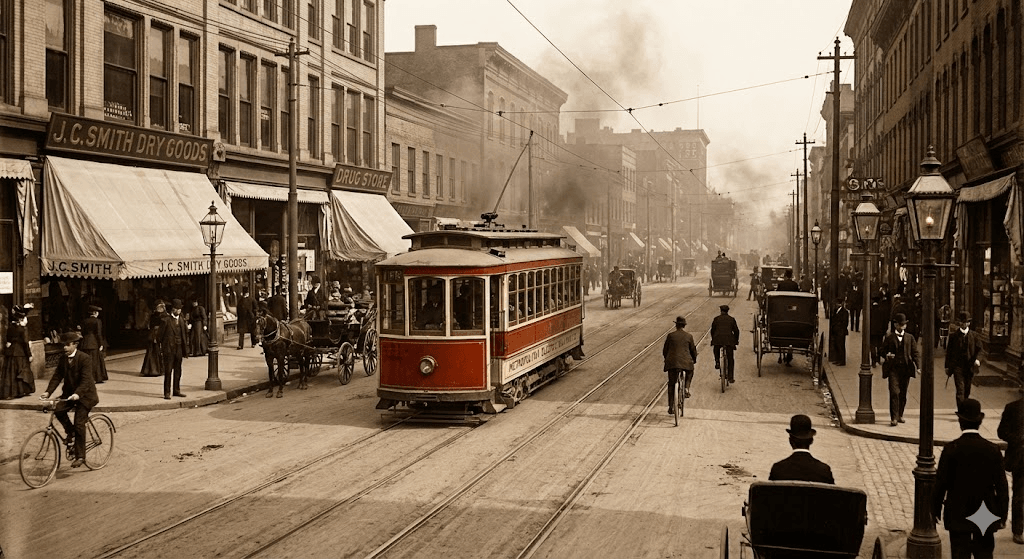 |
In 1888, the advent of the electric streetcar revolutionized urban mobility, offering a faster, cleaner, and more reliable alternative to horse-drawn or steam-powered systems.
Frank J. Sprague's pioneering work demonstrated that mass transit could be both practical and inclusive, reshaping city landscapes across the United States.
For St. Louis, a city deeply rooted in commerce and movement, this innovation had profound implications.
Urban mobility expanded, neighborhoods extended outward, and daily life became less constrained by distance.
The city evolved into a more interconnected entity, moving beyond isolated communities.
The electric streetcar did more than transport passengers; it redefined urban development.
Businesses flourished along transit routes, residential areas emerged near stops, and commutes became more predictable.
Infrastructure served as a social equalizer, providing workers, families, and visitors with shared access to opportunities.
St. Louis, with its history of river commerce and railroads, recognized the value of efficient transportation systems.
The streetcar added a new dimension: local, affordable, and tailored for everyday use.
Today, discussions about transit, accessibility, and urban design trace their origins back to that pivotal moment in 1888.
The electric streetcar demonstrated that investing in mobility equates to investing in community participation.
St. Louis continues to embody this lesson, understanding that accessible infrastructure does more than move people—it connects communities.
In recent years, St. Louis has undertaken significant initiatives to enhance its public transportation system.
In 2025, the city unveiled its first comprehensive Transportation & Mobility Plan in decades, aiming to create a safe, connected, and well-maintained transportation network that enhances quality of life and supports sustainable growth.
Additionally, the city explored the implementation of Bus Rapid Transit (BRT) in the Green Line Transit Corridor to deliver faster, reliable, and cost-effective transit services.
These efforts reflect St. Louis' ongoing commitment to improving urban mobility and accessible infrastructure, building upon the foundation laid by the electric streetcar over a century ago.
As the city continues to evolve, the lessons from its transit history remain integral to shaping a more connected and inclusive future. |
Stay up to date with our local news!
Get articles like this delivered to your inbox.