
Louis Braille's Legacy Inspires Accessibility Innovations in St. Louis |
Empathy-Driven Design Continues to Shape Inclusive Communities |
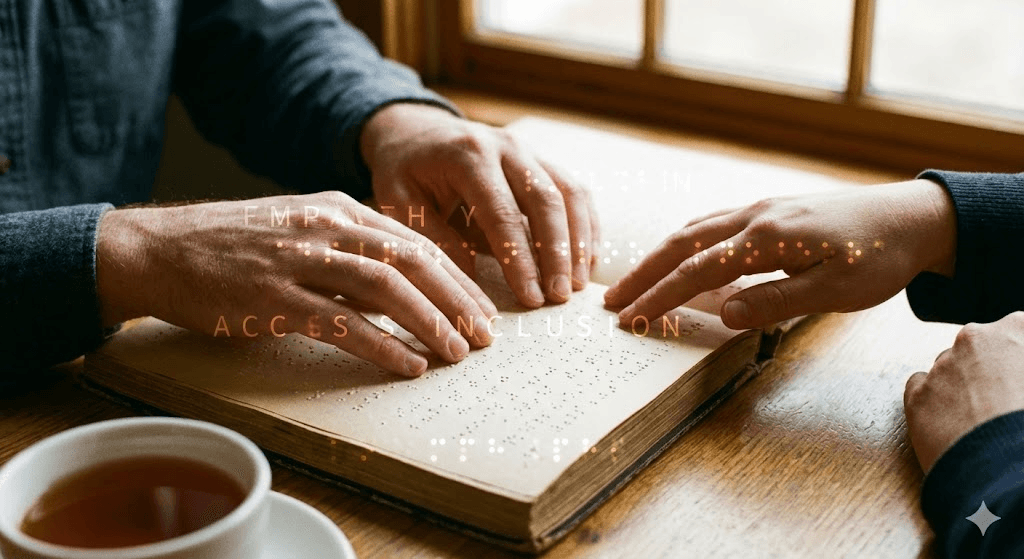 |
On this day in 1809, Louis Braille was born—a visionary whose creation of the Braille system transformed literacy for the blind and visually impaired.
After losing his sight as a child, Braille developed a tactile code of raised dots, granting millions access to the written word.
His invention was rooted in empathy and the belief that knowledge should be accessible to all, regardless of physical ability.
This principle resonates deeply in St. Louis, a city known for its resilience and commitment to social progress.
Accessibility in St. Louis extends beyond physical accommodations; it's about intentional design that includes everyone.
The city's dedication is evident through various initiatives:
In July 2024, the Contemporary Art Museum St. Louis hosted a Disability Pride event, featuring workshops and presentations that celebrated inclusivity and the arts.
The St. Louis Office for Developmental Disability Resources continues to fund projects that enhance independent living and employment opportunities for individuals with developmental disabilities.
In 2024, the Special Education Foundation launched the Autism Independence Project, aiming to improve social skills and independence for students on the autism spectrum.
These efforts reflect a city-wide commitment to empathy-driven design and inclusion history.
By focusing on who has been left out, St. Louis continues to build systems that empower without fanfare, much like Braille's enduring legacy.
In St. Louis, inclusion manifests in everyday ways—public services designed for access, neighborhoods built around shared spaces, and institutions that recognize diversity as a strength.
These are modern echoes of a 19th-century breakthrough rooted in empathy.
Braille's legacy reminds us that the most lasting innovations don't just solve problems; they restore dignity.
And cities that embrace that mindset don't just grow—they become places where more people belong. |
Stay up to date with our local news!
Get articles like this delivered to your inbox.